
FEDECRAIL’s Tourism & Marketing Working Group explores how seasonal events can attract new audiences, strengthen visitor experiences and create fresh opportunities for heritage railways and tramways.
Themed events have become an important part of the visitor offer for many heritage railways and tramways across Europe. From Halloween trains and festive tram rides to wine journeys, stargazing services and New Year’s Eve specials, operators are finding new ways to use their historic vehicles, stations and routes to create experiences that appeal well beyond the traditional railway enthusiast.
That was the focus of the first online event hosted by FEDECRAIL’s Tourism & Marketing Working Group on 8 October 2026. The Group was established to give members a dedicated space to discuss visitor engagement, branding, event development and tourism partnerships — areas that are becoming increasingly important as heritage railways compete for visitors’ leisure time.
The session opened with research and examples from Sára Várkonyi, followed by a roundtable discussion in which member organisations from across Europe shared their experiences, successes, and challenges.
The result wasn’t a single formula for a successful themed event, but something more useful: a collection of practical ideas operators can adapt to their own railway, audience, and local culture.
The most successful events are more than a ride
One of the clearest themes from the discussion was that a themed service becomes more memorable when it feels like a complete experience rather than simply a train or tram journey with a seasonal name.
Examples shared during the session included:
- food and drink;
- children’s activities;
- photo opportunities;
- demonstrations;
- competitions;
- live entertainment; and
- collectable gifts.
These additions do not need to be expensive or elaborate. Their value lies in giving visitors something extra to experience, talk about and remember.
A heritage railway already offers something most leisure attractions cannot easily recreate: historic vehicles, period stations, workshops, distinctive sounds and atmosphere, and often remarkable scenery.
The question is therefore not always, “What new attraction do we need to buy?”
Sometimes it is simply:
“How can we use what we already have differently?”
Seasonal landscapes, dark winter evenings, historic depots and atmospheric stations can all become part of the event itself.
Seasonal themes offer far more than Christmas
Christmas and Santa trains remain a major part of the heritage railway calendar, but Sára’s research showed just how broad the opportunities can be.
Across Europe, operators are already experimenting with autumn rides, wine journeys, roasted chestnut trains, stargazing events and cultural services linked to different celebrations.
Halloween has become particularly widespread, with examples including ghost trains, haunted tunnels, pumpkin carving, forest-spirit rides and activity-filled services.
Santa and Advent services continue to appeal strongly to families, while operators also develop more adult-focused festive experiences around markets, winter atmosphere, food, and drink.
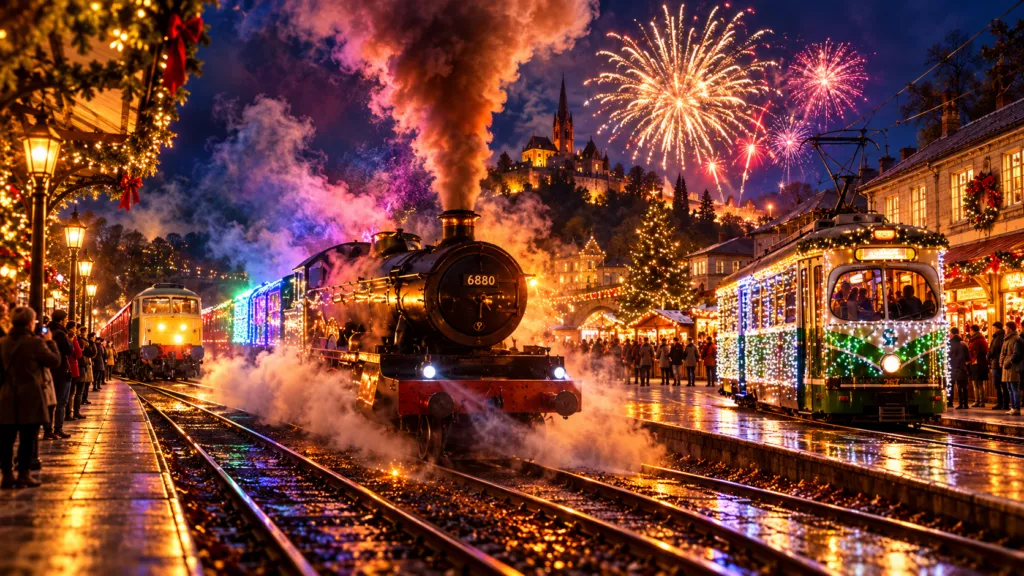
Christmas and New Year events continue to offer strong potential, from illuminated trains and decorated vehicles to festive activities that extend the seasonal experience. New Year’s Eve emerged as a particularly promising opportunity, with several operators reporting very strong demand and some services selling out months in advance.
For tramways, the operating environment differs, but the opportunities remain. Members discussed Glühwein Expresses, Halloween ghost trams, illuminated Advent trams, Santa services and New Year’s Eve operations, as well as private tram hire for birthdays and celebrations.
Local culture can make an event more distinctive
One of the strongest ideas to emerge from the discussion was the value of connecting events to the place in which the railway operates.
Members from Wales and Austria highlighted the potential of national holidays, regional traditions and local culture.
This matters because many seasonal concepts are becoming increasingly common. A railway that simply copies an event being offered by several other attractions nearby may find it harder to stand out.
Local food, folklore, cultural traditions and regional celebrations can make an event feel rooted in its location rather than interchangeable with something offered elsewhere.
That can be a real advantage.
Start small, learn, then grow
The roundtable also produced some very practical advice for organisations considering a new event.
Several operators recommended starting small.
Rather than launching a large programme immediately:
- begin with one or two departures;
- see how visitors respond;
- collect feedback;
- adjust the concept; and
- expand it in future years if the demand is there.
This approach reduces risk while giving the organisation real information about what works operationally and commercially.
For smaller heritage organisations in particular, this can be more realistic than committing significant volunteer time and resources to an untested idea.
A small pilot can tell you far more than assumptions about what visitors might enjoy.
Listen to the people who attend
Visitor feedback was another recurring theme.
Surveys, feedback forms and conversations with returning customers can help operators understand:
- what visitors enjoyed most;
- whether the event felt good value;
- which parts should be improved;
- whether they would return; and
- what other events they would like to see.
Incentives such as discount vouchers can encourage survey participation.
But feedback does not need to come only from formal research.
Social media can provide useful insight too.
What are visitors photographing? What are they sharing? Which parts of the experience are people talking about afterwards?
Those choices can reveal what actually resonated with the audience.
Your website is part of the event experience
Several members highlighted a more basic challenge: sometimes good events are simply too difficult to find.
Outdated websites, unclear navigation, or missing information can create a barrier before a visitor even considers buying a ticket.
An event page should make the essentials immediately clear:
- what the event is;
- when it takes place;
- who it is for;
- what is included;
- how much it costs; and very importantly,
- how to book.
Members from Scandinavia and Eastern Europe also emphasised the importance of English-language information when trying to reach international visitors. Even where a full multilingual website is unrealistic, clear English information on key visitor pages can make a significant difference.
Marketing begins long before the social media campaign. It starts with making the experience easy to understand and book.
Visitors can become part of the marketing
Encouraging visitors to share photographs and experiences online was identified as another simple but valuable opportunity.
Visitor-generated content can:
- extend the reach of an event;
- provide authentic promotion;
- show potential visitors what the experience actually feels like; and
- help operators understand which elements are most memorable.
Photo opportunities can therefore be designed into an event rather than left to chance.
This can be particularly powerful for heritage railways because the visual appeal is already there — historic vehicles, steam, lighting, period buildings and dramatic seasonal settings naturally lend themselves to shareable content.
Partnerships can make the experience bigger
The discussion also looked beyond the railway itself.
Austria’s museum-night model — where one pass provides access to several participating venues — prompted discussion about the possibilities for collaboration between heritage railways and nearby museums or cultural attractions.
Similar partnerships could involve:
- tourism boards;
- local authorities;
- museums;
- cultural organisations;
- food producers;
- seasonal markets; or
- other visitor attractions.
This can help organisations reach one another’s audiences and create a stronger destination offer.
Instead of asking visitors to choose between attractions, collaboration can give them a reason to experience several.
Keep successful events moving
Another important lesson came from Lithuania, where members described how Halloween had become so popular that villages and other attractions began developing their own competing events.
Attendance at the railway was affected.
The response was not to abandon themed events, but to innovate.
Ideas included depot dinners and gastronomic trains where local food could be served at different stations.
It is a useful reminder that a successful event should not necessarily remain unchanged forever.
The local leisure market moves. Visitor expectations change. Competitors adapt.
A strong event can retain its identity while still introducing new elements, new themes or new reasons to return.
There is still plenty of room for new ideas
The roundtable also explored themes that are still underused.
Ideas included:
- cultural celebrations such as Diwali;
- national and regional holidays;
- workshops;
- wreath-making;
- book clubs;
- murder mysteries; and
- other activity-led experiences.
The point isn’t to add a long list of events, but to look beyond Halloween and Christmas. The best themes may reflect the railway’s location, history, audience or community.
The real value is in sharing what works
Perhaps the most useful part of the session was not any single event idea. It was the opportunity for members to compare experiences.
Contributions from Norway, Germany, Lithuania, Wales, Finland and elsewhere showed how differently similar challenges are approached across Europe.
A concept that works well for one operator may inspire another. A mistake encountered in one country may help another organisation avoid the same problem. An ordinary depot, station or winter landscape may look completely different when another member explains what they have managed to do with theirs.
That exchange is exactly what FEDECRAIL’s Tourism & Marketing Working Group was created to support.
The Group will continue exploring topics including digital marketing, visitor experience, branding, tourism partnerships, event pricing, social media and accessibility.
For heritage railways and tramways looking to broaden their audiences, strengthen their visitor offer and make better use of the assets they already have, there is a great deal to be gained from sharing ideas rather than developing them in isolation.
And sometimes, the next successful event may begin with nothing more complicated than hearing what another railway tried — and asking:
Could that work here?
For more information about Tourism & Marketing Working Group, please email [email protected]